Headache and Migraine Guide
A patient guide to distinguishing common headache patterns, migraine aura, medication overuse, and symptoms that need urgent assessment.
Contents6 sections
Common headache types
Headache is not one disease. In primary disorders such as migraine, tension-type headache, and cluster headache, another illness does not explain the pain, but correct classification still changes treatment. Tension-type headache often feels like pressure or tightness on both sides. Migraine commonly causes moderate or severe, pulsating pain that worsens with activity, with nausea or sensitivity to light and sound. Cluster headache is less common and causes extremely severe pain around one eye, sometimes with tearing, redness, or nasal symptoms on that side.
- Record when pain starts, how long it lasts, its location, and associated symptoms.
- List prescription and nonprescription medicines and the number of days used each month.
- Seek assessment for a new or changing pattern instead of assuming it is migraine.
Migraine and aura
Aura is a temporary neurological symptom that occurs before, during, or occasionally without migraine pain. It can cause zigzags, flashing lights, or a blind area; tingling that travels across the face or arm; or difficulty speaking. Symptoms usually build gradually and resolve. A first episode, an event unlike the person’s established pattern, or weakness and speech difficulty that do not promptly resolve cannot be safely distinguished from stroke at home and needs emergency assessment.
Emergency warning signs
Most headaches are not emergencies, but some patterns can accompany bleeding, infection, stroke, or another secondary cause. A new severe headache that reaches maximum intensity within seconds, new weakness or numbness, altered consciousness, seizure, fever with neck stiffness, or new vision or speech change needs urgent assessment. New severe headache in pregnancy or after birth, headache after head injury, and a progressively worsening new pattern should also be assessed without delay. A first new headache after age 50 or new pain triggered by coughing, sneezing, straining, or exertion needs timely clinical assessment even when no immediate emergency sign is present.
Preventing medication overuse
Frequent use of medicines for acute pain can make headaches more frequent in some people. Risk differs by medicine class and by the number of treatment days per month, so one number is not a safe limit for everyone. Tell your clinician about every product, including nonprescription and caffeine-containing combinations. Abrupt withdrawal is not suitable in every situation; a reduction plan and preventive treatment should be individualized.
- Do not increase doses yourself or combine products that contain the same active ingredient.
- Track the number of days per month on which you use an acute medicine.
- Discuss prevention when attacks, disability, or adverse effects are frequent.
About peripheral nerve blocks
Injection of local anesthetic, sometimes with another medicine, near selected nerves in the head or neck may be considered for certain headache disorders. It is not suitable for everyone. Expected benefit, the medicine used, pregnancy or breastfeeding, blood-thinning treatment, infection, allergy, and risks such as temporary numbness or soreness should be reviewed beforehand. Benefit and duration vary; the procedure cannot promise freedom from pain and does not replace a complete migraine plan.
References
KEEP READING
Related guides
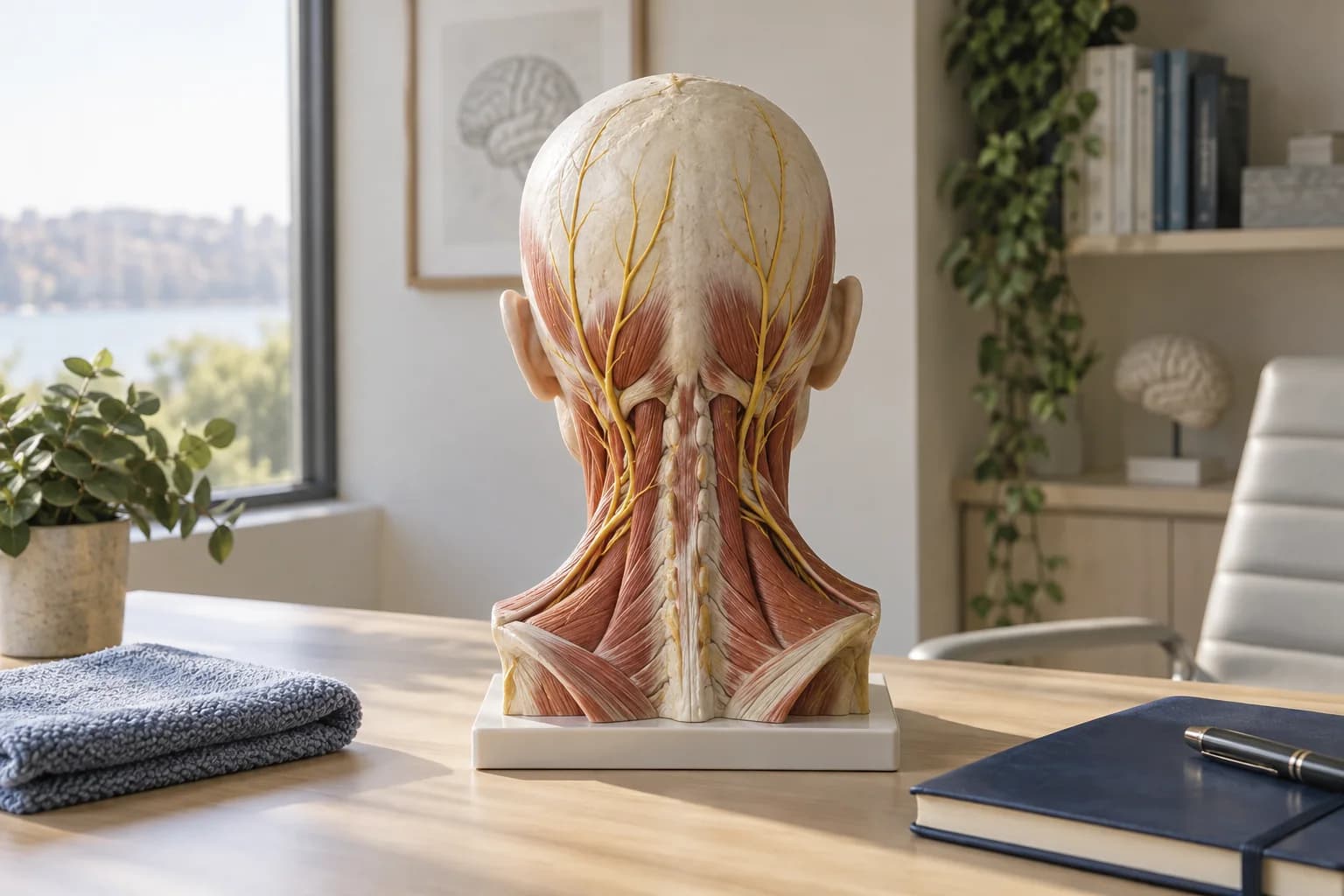
Peripheral Nerve Blocks for Headache
Injections around the occipital, supraorbital or supratrochlear nerves may offer temporary relief for selected headache disorders; suitability, drug choice, uncertain benefit and risks need individual discussion.
Read guide: Peripheral Nerve Blocks for Headache
Stroke: Diagnosis, Treatment, and Recovery Guide
A guide to recognizing stroke quickly, understanding imaging-based emergency treatment decisions, and planning individualized rehabilitation.
Read guide: Stroke: Diagnosis, Treatment, and Recovery Guide
Dementia and Alzheimer’s Guide
A guide to distinguishing ordinary aging from cognitive change that affects daily function, understanding assessment, and addressing modifiable risks.
Read guide: Dementia and Alzheimer’s Guide