Facet-Related Pain and Medial Branch Blocks
A medial branch block is a temporary diagnostic procedure used in selected chronic low back pain to assess whether facet joints may contribute; it is not definitive proof and may provide no benefit.
Contents6 sections
Facet joints and pain
Facet joints are small joints at the back of the vertebrae that guide spinal movement. Age-related changes are common, but an imaging change does not show that the joint must be painful. Pain felt across the lower back, buttock or hip and aggravated by some movements can come from a facet joint; discs, muscles, the sacroiliac joint and other structures can produce similar symptoms.
Assessment and imaging help consider infection, fracture, cancer, substantial nerve compression and other serious causes. No single examination feature or MRI appearance confirms facet pain. New loss of bladder or bowel control, numbness around the saddle area or progressive leg weakness should not wait for an injection appointment and requires emergency assessment.
The diagnostic role of a medial branch block
Medial branches are small nerves carrying pain signals from facet joints. In a diagnostic block, a small volume of local anaesthetic is placed near them and the person records pain while repeating agreed activities. A marked temporary reduction suggests that the targeted joints may contribute; it does not prove the source with certainty. False-positive and false-negative results are possible.
NICE describes medial branch block in chronic localised low back pain as a diagnostic tool for estimating possible response to radiofrequency denervation. Radiofrequency is a separate procedure. Even a positive block cannot guarantee durable benefit; the decision also considers non-surgical treatment, functional effect, personal goals and individual risk.
The procedure, fluoroscopy and contrast
The person usually lies face down, the skin is cleaned with antiseptic and local anaesthetic is placed under the skin. Fluoroscopy, a live X-ray technique, guides the needle towards a bony target; a small amount of iodinated contrast may assess position. Fluoroscopy improves targeting but does not directly display every blood vessel and nerve, and it cannot remove every complication.
X-rays use ionising radiation. The team aims for the lowest acceptable dose for the shortest necessary time. Report pregnancy or possible pregnancy in advance. If contrast is planned, discuss previous contrast reactions, allergies and significant kidney problems. Contrast helps assess distribution but does not guarantee maximum safety or success.
Interpreting the result
The skin-numbing injection and block can cause stinging, pressure, discomfort or pain. Local anaesthetic may briefly reduce pain, may not help, or pain may temporarily worsen. A percentage reported on the procedure table is not by itself a diagnosis or forecast of long-term success. The result is assessed through pre-agreed activities and a pain diary during the expected anaesthetic period.
If pain decreases, participation in rehabilitation and daily activity may become easier, but pain-free full performance cannot be promised. If it does not decrease, that result can still inform assessment. A broader plan can include movement, education, sleep and mental health support, weight management, work adaptation and appropriate medicines.
Risks, preparation and aftercare
Risks include injection-site pain or bruising, bleeding, infection, temporary numbness or weakness, dizziness, allergic reaction, increased pain and, rarely, nerve injury. If steroid is included, blood glucose may rise and flushing, temporary menstrual changes or local tissue effects can occur. Not every block contains steroid; its purpose and contents belong in consent.
Tell the team about anticoagulants, diabetes, infection, allergies and possible pregnancy; do not stop an anticoagulant on your own. Follow driving and escort instructions. Seek prompt medical help for fever, spreading redness, new persistent weakness, altered bladder or bowel control, or escalating pain.
References
- Quality statement 6: Spinal injections (opens in a new tab) — National Institute for Health and Care Excellence
- Facet joint injections and medial branch block (opens in a new tab) — The Dudley Group NHS Foundation Trust
- Fluoroscopy (opens in a new tab) — U.S. Food and Drug Administration
KEEP READING
Related guides
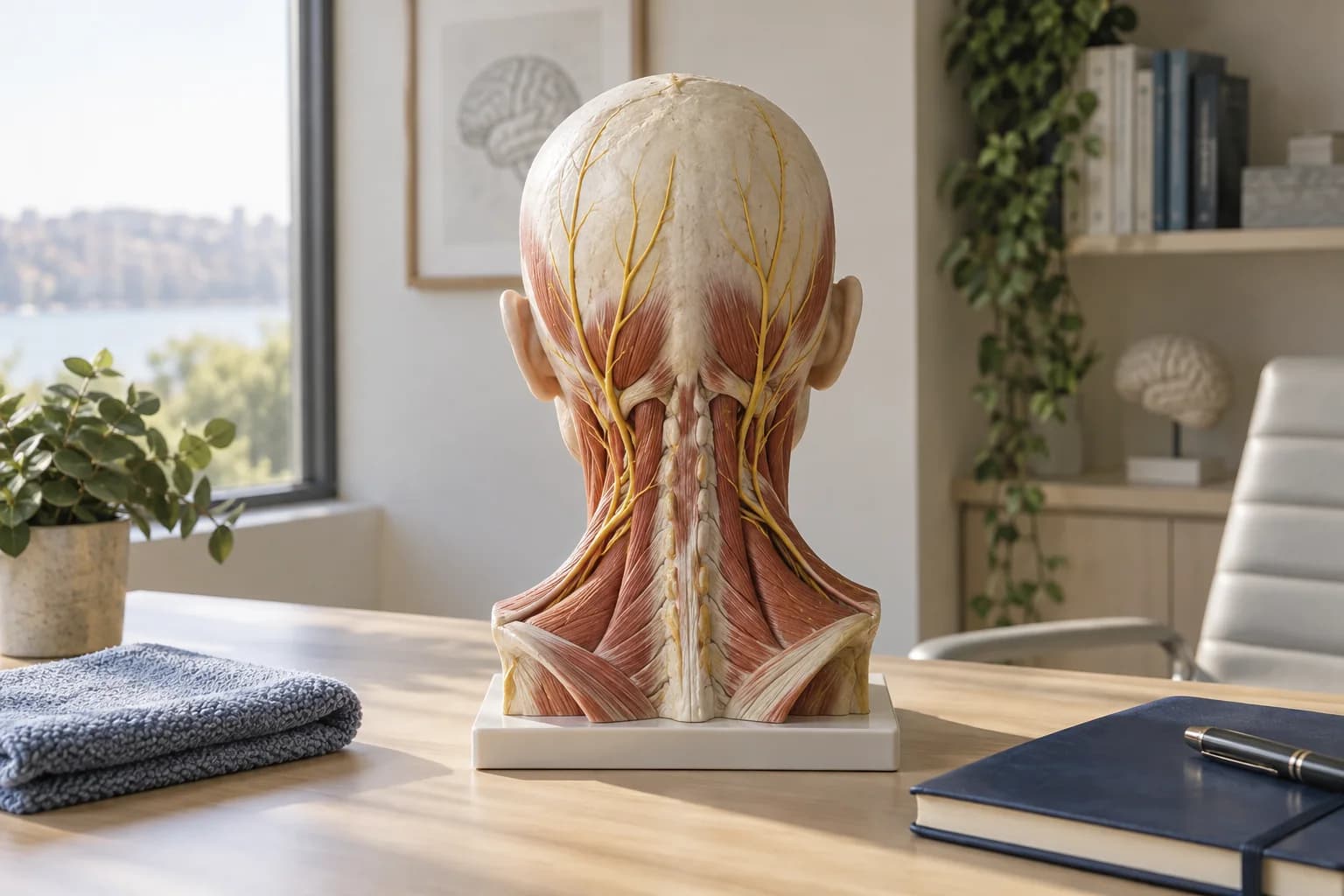
Peripheral Nerve Blocks for Headache
Injections around the occipital, supraorbital or supratrochlear nerves may offer temporary relief for selected headache disorders; suitability, drug choice, uncertain benefit and risks need individual discussion.
Read guide: Peripheral Nerve Blocks for Headache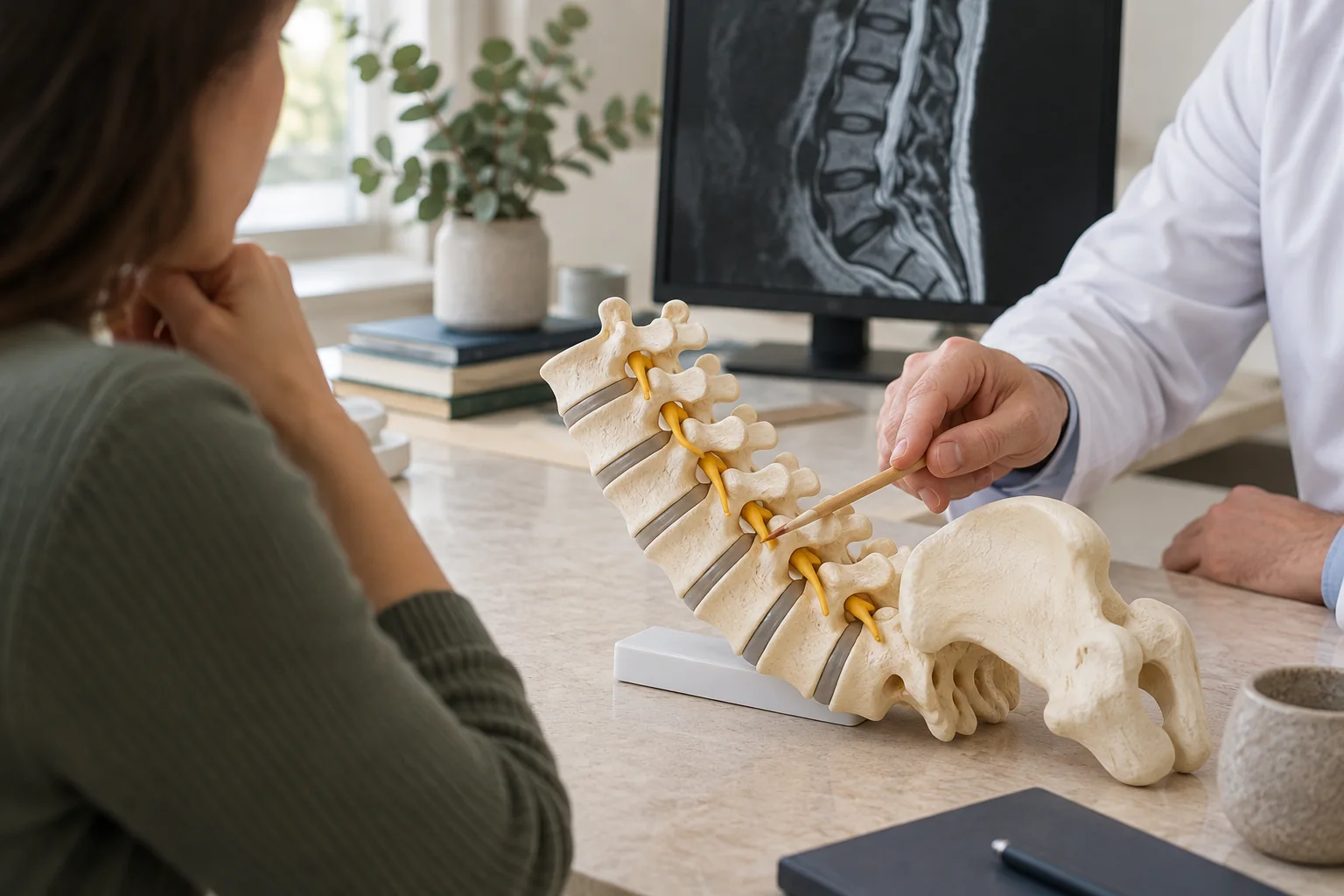
Selective Nerve Root Injections
An image-guided selective nerve root injection may provide diagnostic information or temporary symptom reduction for selected radicular pain; response is unpredictable and risks can be serious.
Read guide: Selective Nerve Root Injections
Headache and Migraine Guide
A patient guide to distinguishing common headache patterns, migraine aura, medication overuse, and symptoms that need urgent assessment.
Read guide: Headache and Migraine Guide