Developmental Red Flags in Infancy and Childhood
Milestones do not diagnose a condition; a skill missing at the expected age, marked asymmetry or loss of an acquired skill should prompt developmental screening and, where appropriate, specialist assessment without delay.
Contents6 sections
How to use this guide
Children do not acquire a skill on exactly the same day. Milestones are abilities that most children show by a given age and help families discuss development; they are not a diagnostic test. A clinician may use corrected age for a young child born prematurely. Missing one item does not prove a disorder, but it is a reason to speak with the child's healthcare professional rather than relying on 'wait and see.'
Developmental monitoring means families and professionals observe skills over time. Standardised developmental screening uses a validated tool administered by a trained professional. The AAP schedule reported by CDC recommends general screening at 9, 18 and 30 months, autism-specific screening at 18 and 24 months, and screening whenever a parent or professional is concerned. Missing a routine visit does not mean concerns should wait.
Signs to discuss by age
The table retains the PDF's movement, social, cognitive and communication categories. The CDC 9-month row is a milestone monitoring point; the NICE threshold of not sitting by 8 months corrected age is a referral threshold to child development services. They should not be treated as interchangeable. NICE also supports professional assessment for abnormal tone, movement asymmetry and delayed motor development. Persistently closed fists, leg scissoring, visual tracking or weight bearing are not standardised screening results or diagnoses by themselves; a child's clinician should interpret their context and age relevance.
| Age | Movement and motor signs | Social, cognitive and communication signs |
|---|---|---|
| 2 months | Does not briefly lift the head when on the tummy; marked floppiness, stiffness or reduced movement. | Does not look at a face, react to a loud sound, or shows marked difficulty calming or engaging. |
| 4 months | Cannot hold the head steady when held; does not bring hands to mouth or has a clear difference in movement between sides. | Does not look to gain a caregiver's attention, smile back, or make cooing sounds. |
| 6 months | Does not roll from tummy to back or push up with the arms; persistently keeps the fists closed or repeatedly crosses the legs in a scissoring pattern when held upright, alongside marked tone or movement differences. | Does not recognise familiar people, laugh, take turns making sounds or turn towards a voice. |
| 9 months | Cannot sit without support, does not reach for objects or pass one between hands, or shows marked hand preference before age one. | Does not look when named, show facial expressions, react when a caregiver leaves, babble varied sounds, or visually track moving people and objects with the eyes. |
| 12 months | Does not bear weight through the legs when supported upright, pull to stand or attempt to move while holding furniture. | Does not wave, play a simple social game, appear to understand 'no,' or use a meaningful parent name. |
| 15 months | Does not take a few independent steps or try to feed with fingers. | Does not point to request, show a liked object, try one or two words, or look at a familiar named object. |
| 18 months | Does not walk independently; persistent toe walking, frequent falls or clear asymmetry. | Does not point to share interest, try to say three or more words besides 'mama' or 'dada,' follow a one-step direction or copy simple actions. |
| 24 months | Does not run, kick a ball, walk up a few stairs or has marked imbalance in daily movement. | Does not combine at least two words, notice another person's distress, join simple shared play or point to a requested picture. |
Loss of acquired skills
Developmental regression includes a child who stops walking after previously doing so, loses words, loses motor skills such as waving or using a spoon, or clearly withdraws from established social engagement. For children under three with language or social regression, NICE directs an autism diagnostic assessment; it directs paediatric or paediatric neurology assessment for motor regression at any age or language regression after age three.
Three principles for families
Generalisations such as 'boys speak late' should not delay assessment; sex does not explain observed language loss or marked delay. Families observe the child across settings, so their concern belongs in the clinical assessment. Notes, short videos and examples of what the child can and cannot yet do may help discussion.
Early support can improve development and participation, but no specific therapy or timing can guarantee a radical change in future independence. Support may include physiotherapy, occupational therapy, speech and language therapy, hearing or vision services, psychology, education and medical treatment according to need. The purpose is to build on strengths and agree measurable goals with the family.
What assessment may include
An initial review may cover pregnancy and birth, growth, eating, sleep, possible seizures, family history, play, language and movement. Hearing and vision checks, a standardised developmental screen and detailed developmental examination may be appropriate. EEG, MRI, metabolic and genetic tests are not routine for every child; they are selected to answer questions raised by history and examination.
A family does not need to wait for a definite diagnosis before seeking help. The child's clinician may refer to developmental services, paediatric neurology, child mental health, audiology, ophthalmology or early support as appropriate. Even after a reassuring assessment, return if there is a new concern, regression or a plateau in the child's developmental trajectory.
References
- CDC's developmental milestones (opens in a new tab) — U.S. Centers for Disease Control and Prevention
- Developmental monitoring and screening (opens in a new tab) — U.S. Centers for Disease Control and Prevention
- Cerebral palsy in under 25s: assessment and management (NG62) (opens in a new tab) — National Institute for Health and Care Excellence
- Autism spectrum disorder in under 19s: recognition, referral and diagnosis (CG128) (opens in a new tab) — National Institute for Health and Care Excellence
KEEP READING
Related guides
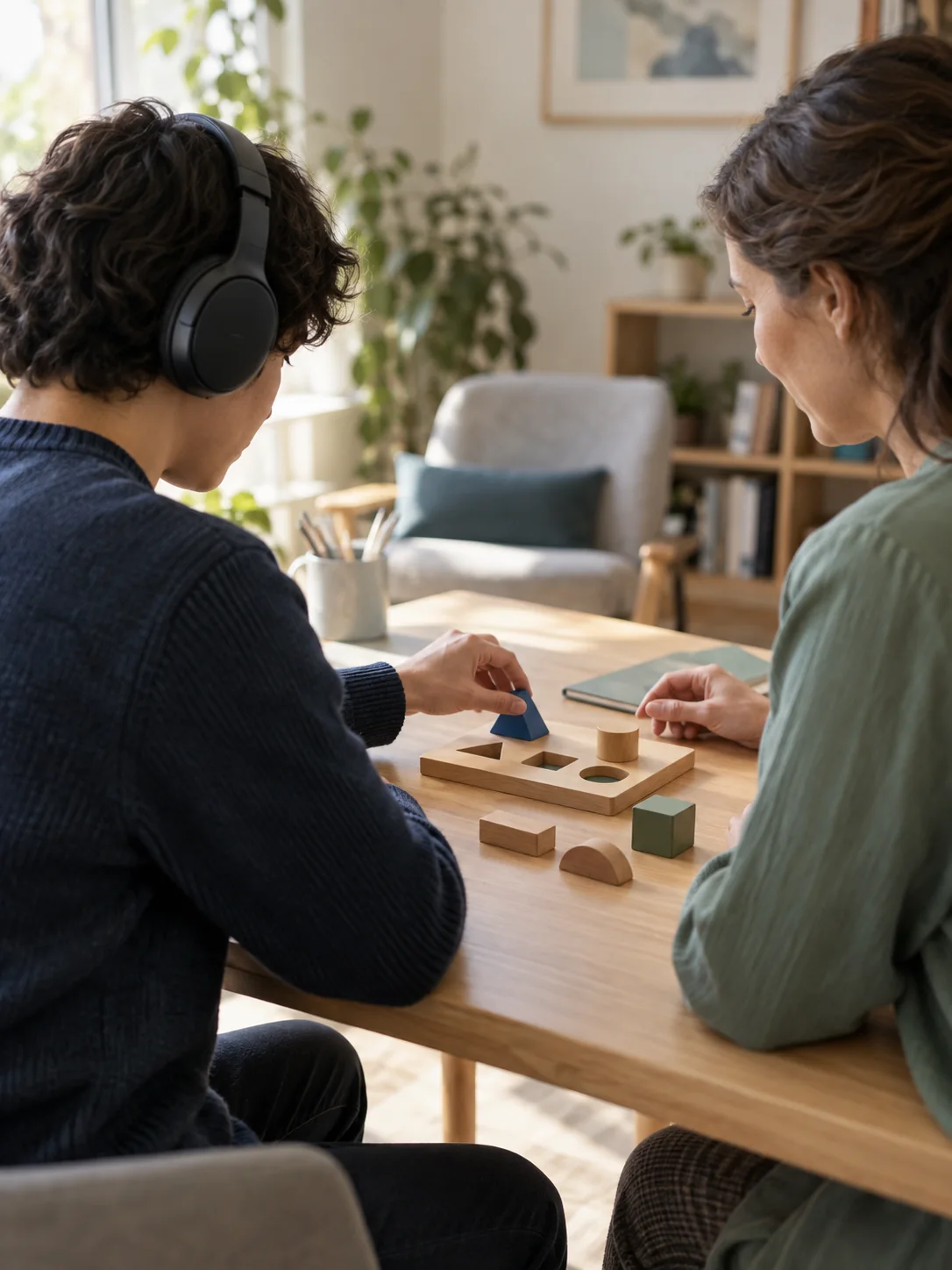
Neurological Assessment and Follow-up for People with Additional Needs
Follow-up for children and adults with additional needs is coordinated care that looks beyond diagnosis to function, communication, nutrition, sleep, seizures, pain, mental health, education and family priorities.
Read guide: Neurological Assessment and Follow-up for People with Additional Needs
Neuromuscular Disorders Guide
A guide to symptoms, investigations, and team care across motor-neuron, peripheral-nerve, neuromuscular-junction, and muscle disorders.
Read guide: Neuromuscular Disorders Guide
Epilepsy and Seizure Guide
A guide covering first-seizure assessment, CDC-based seizure first aid, treatment, pregnancy, sport, driving, and military-service review in Türkiye.
Read guide: Epilepsy and Seizure Guide